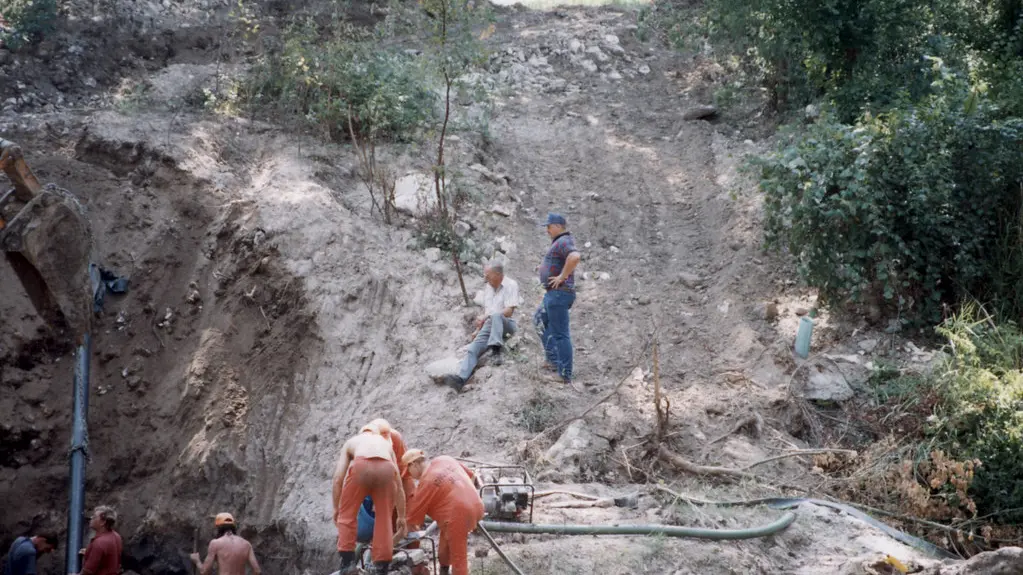
Find the fault and choose the right repair method.
Signs of a Sewer Line Problem
Multiple drains backing up
Especially tubs and showers on the lowest level.
Sewer odor inside or outside
Gas escaping from a crack or a dry trap.
Soggy or unusually green patches in the yard
Wastewater leaking into the soil.
Recurring main-line clogs
Roots or a belly catching debris.
What Causes Sewer Line Damage?
Tree Roots
Roots enter through joints and small cracks, especially in clay pipe, then grow and catch debris.
Pipe Collapse
Badly deteriorated or crushed sections can collapse, stopping flow entirely.
Shifting Soil
Dallas’s expansive clay soil shrinks and swells with wet and dry seasons, which can shift pipes, crack joints, and create low spots (bellies) where waste collects.
Old Pipe
Many homes built before the 1970s in neighborhoods like Lakewood, Oak Cliff, and the M Streets have clay or cast-iron sewer lines. Clay joints let roots in; cast iron corrodes from the inside.
Blockage
Grease, wipes, and foreign objects build up, especially where the pipe is already rough or sagging.
Sewer Camera Inspection
A camera is run through a cleanout to record the full line. The video shows the pipe material, the location and depth of damage, and whether the problem is roots, a crack, an offset joint, or a collapse. Ask for a copy of the footage. See sewer camera inspection.
Sewer Line Repair Options
Spot repair
Excavate and replace one damaged section. Good for a single defect.
Root clearing and jetting
Cuts and flushes roots as a maintenance step; it does not fix the opening they entered through. See hydro jetting.
Trenchless Sewer Repair
Trenchless lining (CIPP)
A resin liner is cured inside the old pipe, creating a new pipe within it. Less digging, but the host pipe has to be suitable.
Pipe bursting
A new pipe is pulled through while the old one is broken outward.
Sewer Line Replacement
Open-trench or trenchless full replacement is used when the line is extensively damaged, collapsed, or at the wrong slope. Sewer work in Dallas typically requires a permit, and the property owner is generally responsible for the line from the house to the city connection. Confirm who pulls the permit and what restoration (lawn, driveway, landscaping) is included.
Sewer Repair Cost Dallas
Costs depend on length, depth, method, and restoration. Published data commonly prices replacement per linear foot. See our sewer line repair cost guide for published ranges with linked sources, plus the factors that change the price. Figures there are third-party ranges, not quotes.
Repair vs Replace
A single defect in otherwise sound pipe usually favors a spot repair. Multiple defects, a long belly, a collapse, or deteriorated clay or cast iron along the run usually favor lining or replacement. Base the decision on the camera footage, and ask for each option priced in writing.
FAQs
Does homeowners insurance cover sewer line repair?
Often not for wear or roots, but some policies offer service-line coverage. Check your policy.
Is trenchless always better?
Not always. It avoids digging, but a sagging or collapsed line may still need excavation.
How long does sewer replacement take?
Many residential jobs take one to three days, plus permit and inspection time.
Ready for help?