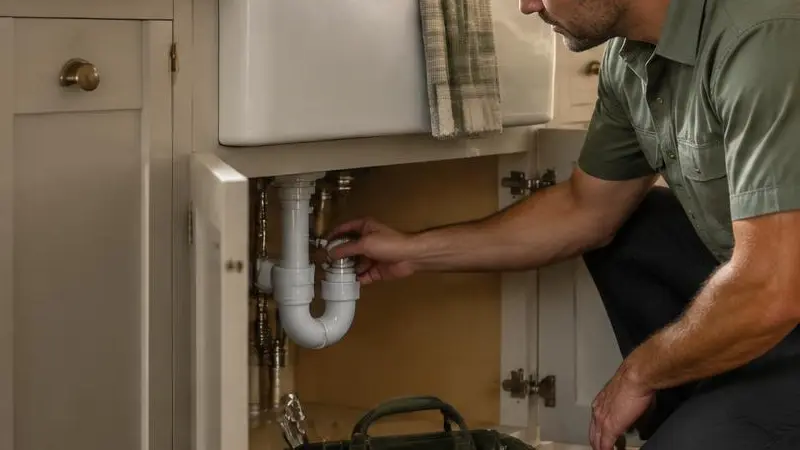
Replace failing supply pipes for good.
Signs Your House Needs Repiping
Multiple leaks or slab leaks
A pattern means the system is failing.
Galvanized steel pipes
Common in pre-1960s Dallas homes; they rust inside and restrict flow.
Low pressure and discolored water
Corrosion and scale narrowing the pipes.
Polybutylene pipe
A gray plastic pipe used in some 1970s–1990s homes, known for failures.
PEX Repiping
PEX is flexible, needs fewer fittings, tolerates freezing better than rigid pipe, and generally has a lower installed cost. It is the most common choice for whole-house repipes today.
Copper Repiping
Copper has a long track record and heat tolerance, but higher material and labor cost. Moderately hard water can contribute to wear over time.
Galvanized Pipe Replacement
Galvanized steel is common in pre-1960s Dallas homes. It rusts from the inside, narrowing the pipe, which causes low pressure and discolored water. Replacement, not repair, is the usual fix once corrosion is widespread.
Repiping Process
New lines are typically routed through the attic and walls rather than under the slab, which also avoids future slab leaks. Expect small wall openings at fixtures, interrupted water service, and drywall patching. A permit and inspection are generally required. Confirm in writing who patches and paints.
How Long Does Repiping Take?
Many whole-house repipes take a few days, depending on home size, fixture count, and access, plus inspection scheduling. Most homeowners can stay in the home with some water interruptions.
Repiping Cost Dallas
Material, home size, fixture count, and wall access drive the price. See our repiping cost guide for published ranges with linked sources, plus the factors that change the price. Figures there are third-party ranges, not quotes.
FAQs
Can I stay in my home during a repipe?
Usually yes, with some water interruptions.
Does repiping include drywall repair?
Sometimes. Confirm in writing who patches and paints.
Ready for help?