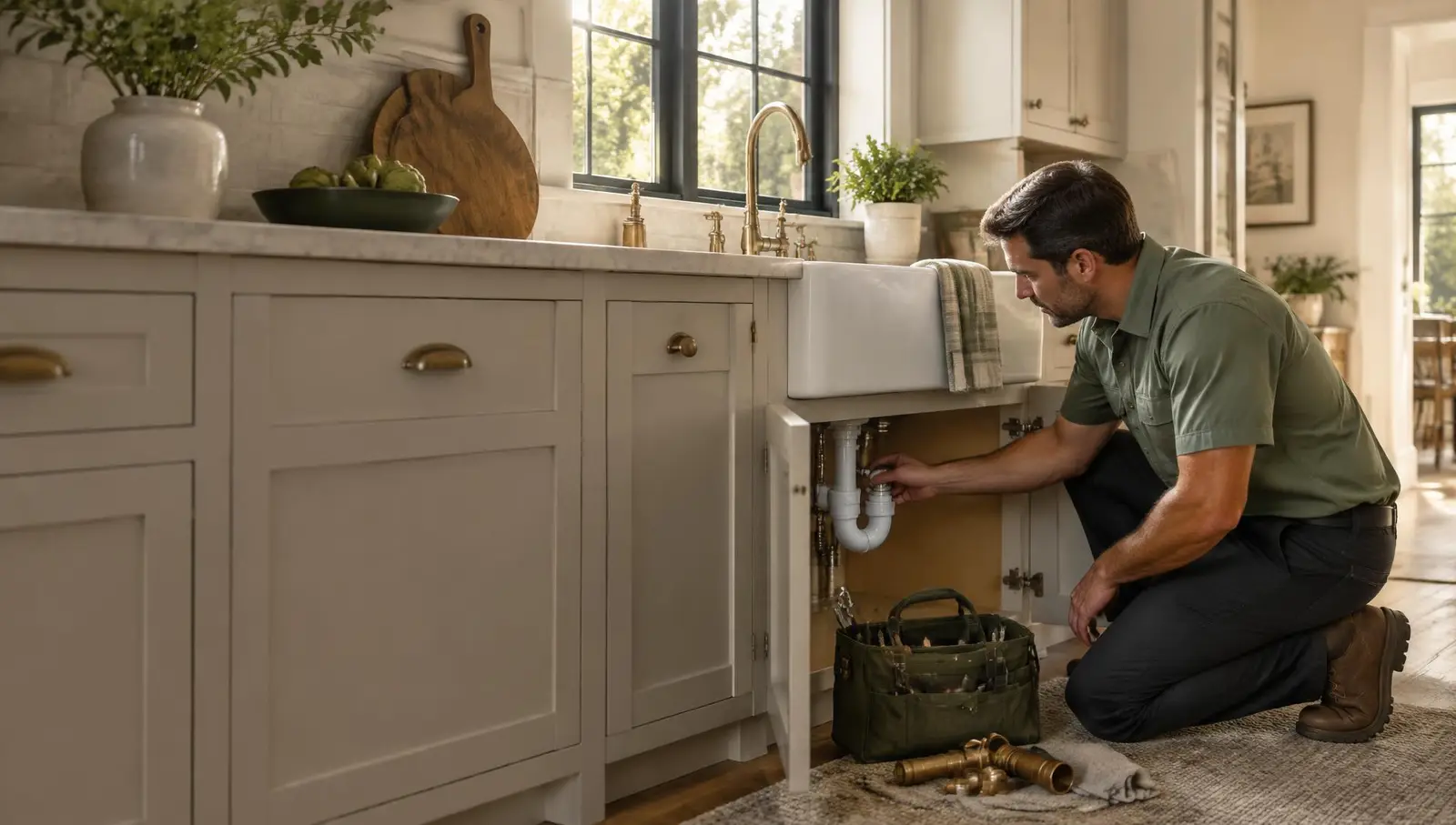
Verify the actual plumbing professional
Use the Texas State Board of Plumbing Examiners to check appropriate credentials and status. The website you used to discover a provider is not necessarily the licensed company doing the work. Ask which business is contracting with you and who supervises the job.
Ask for a written scope
An estimate should identify the problem, proposed work, material or equipment, exclusions, and any assumptions. For underground work, discuss access and restoration. For equipment replacement, specify the model and required connection upgrades.
Separate assessment from repair
A diagnostic charge, a camera inspection, and a repair charge can be separate items. Ask how each is billed, whether any fee is credited toward repair, and what happens if the provider cannot locate the fault during the visit.
Clarify permits and inspections
Requirements depend on the project and jurisdiction. Ask the provider whether permits or inspections apply and who handles them. Use City of Dallas official resources for current requirements rather than assuming a similar job elsewhere follows the same rules.
Understand scheduling and urgent fees
Availability and after-hours pricing belong to the provider. Confirm both before accepting an appointment. A referral request is not a guaranteed booking, and a website should not imply a response time it cannot control.
Get warranty terms in writing
Ask who covers parts, labor, and restoration, and for how long. Keep the invoice, estimate, model information, and inspection documentation. If you were introduced through a service network, confirm the provider remains responsible for the work and any agreed warranty.
Identify the business you will actually hire
A search result, directory, or referral platform can help you discover options, but it may not be the company that performs the work. Ask for the legal or trading identity of the business contracting with you and the name or credentials of the appropriate plumbing professional. Use current Texas State Board of Plumbing Examiners resources to check credentials rather than relying on a logo, uniform, or statement in an advertisement.
PlumberDallas.com is an information and service-request platform, not the licensed contractor carrying out your repair. An available participating provider is responsible for assessment, scheduling, pricing, billing, and its own work. Read how service requests work before arranging a visit, and confirm who will send the estimate and invoice. If the name changes between your first conversation and the job paperwork, ask for an explanation before approving work. Clear identity helps you know whom to contact with questions or a later concern.
Match the proposed assessment to the symptoms
You do not need to diagnose your own plumbing to have a productive conversation. Describe affected fixtures, when the issue began, whether it is getting worse, and any recent work. A single slow sink, several backed-up drains, and unexpected water use call for different starting questions. Our plumbing diagnostic guide can suggest a category, but a category is not confirmation that a particular repair is necessary.
Ask what the initial visit includes and what it can establish. For repeated backups, a camera inspection may be discussed; for unexplained consumption, leak detection may be relevant. Neither should be recommended as a universal answer to every complaint. Tell the provider about previous clearing, repairs, and products used so they can assess safely. A careful explanation should connect the proposed method with your observations and state any limitations before you pay for a major next step.
A useful estimate defines work, exclusions, and changes
A written estimate should explain the confirmed problem or any uncertainty, proposed work, materials or equipment, included labor, and important exclusions. Ask whether diagnostic charges are separate, whether any fee is credited to repair, and how extra work must be approved. If the provider cannot yet see the full condition, request a clear description of assumptions instead of interpreting a provisional figure as a guaranteed final total.
Our Dallas plumbing cost guide helps you compare scope rather than unverified price ranges. Underground work may need access, utility locating, concrete removal, landscaping, or later restoration. Equipment replacement can involve connection changes and startup testing as well as the unit itself. Ask who handles each part and whether specialist follow-up is excluded. Comparing two proposals becomes much easier when both describe the same outcome; a smaller headline total is not necessarily better value if essential work appears only as an unspecified extra.
Ask who handles permits, access, and cleanup
Requirements depend on the project and the actual jurisdiction. Ask the provider whether permits and inspections apply and who is responsible for arranging them. Check current official City of Dallas information for work in Dallas, and verify the municipality if the property is near a boundary. A provider’s work elsewhere does not establish the requirements for your address. Keep any relevant paperwork with the final job records.
Discuss access and disruption before the appointment. Will the provider need to move equipment, open a wall, reach an attic, or excavate outside? How will water interruptions be coordinated, and who should be present to authorize decisions? Tenants should involve the property owner or responsible manager. For occupied businesses, the commercial plumbing guide explains why operations and authorization matter. Clarify cleanup, disposal, and restoration separately; finishing the plumbing repair does not automatically mean every surrounding surface will be restored by the same business.
Confirm scheduling and warranty terms without assumptions
Ask the actual provider to confirm the appointment, expected arrival window, and any urgent or after-hours charges. Do not rely on an advertising claim as a substitute for direct confirmation. If active flooding, sewage, electrical danger, or suspected gas leakage is present, follow emergency safety guidance and contact appropriate emergency services or the utility when necessary. A referral request does not replace emergency response and does not guarantee immediate availability.
Before approving work, ask who covers parts, labor, and any restoration, how concerns are reported, and which exclusions apply. Equipment manufacturers and installers may offer different written terms. Keep the estimate, authorization, invoice, model information, and findings from inspections together. Our common plumbing questions cover the platform’s role; request plumbing help when you are ready to share the symptoms and location. The final decision should rest on a clear diagnosis, a complete proposal, and the verified identity of the business doing the job.
Ready for help?